
 Image 1 of 1
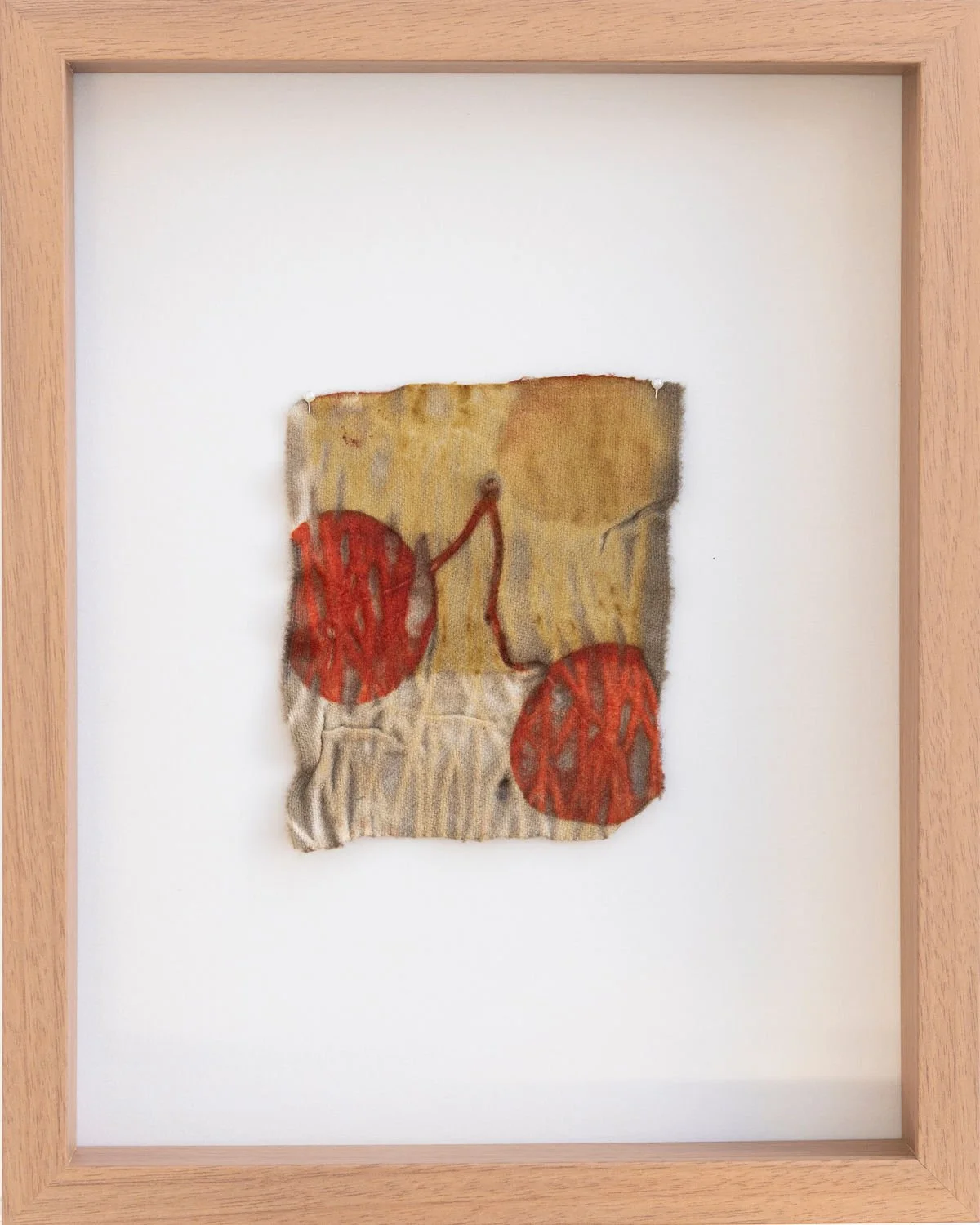
This piece is a monoprint created through an eco-printing technique on a wool substrate, presented as a two-dimensional framed artwork. Botanical materials were used to imprint organic shapes and subtle color gradients directly onto the wool surface. The result is a single, non-reproducible impression: layered leaf silhouettes, delicate vein marks, that emphasize texture and the qualities of plant matter.
Materials and process
Substrate: 100% Pendleton wool fabric, chosen for its rich ability to receive and retain natural pigments.
Dye Materieal: Eucalyptus Cinerea (Silver Dollar Eucalyptus)
No synthetic pigments or fixatives were used.
Technique: Eco-printing + monoprint approach — botanical material arranged on wool, bundled and either steamed or submerged in the dye pot, then removed to preserve a single, unique print.
Framing: Simple frame in a neutral finish to focus attention on the textile surface.
Visual and tactile qualities
Palette: Earth-driven tones — vibrant orange, warm umber, muted olive, soft maroon, and graphite-gray highlights. Color intensity varies across the surface, creating natural gradation and depth.
Texture: The wool’s nap is visible and tactile, enhancing the organic marks. Some areas show concentrated pigment and slight surface relief where plant matter contacted the fabric; other areas display gentle tonality transitions.
Composition: Asymmetrical and organic; botanical outlines suggest movement and seasonality rather than literal representation. Negative space is used intentionally to balance dense marks and allow the wool’s texture to read as part of the composition.
Dimensions and presentation
Two-dimensional work designed for wall display.
Dimensions: 14”l x 11”w x 2.5”d
Framing details include archival mounting, spacing to prevent direct contact with glazing, and a hanging system suited for secure display.
Care and conservation
Keep out of direct sunlight to preserve natural dyes.
Avoid high humidity and fluctuating temperatures.
Bottom portion of the work is left free suggesting the movement found in nature.
This eco-printed monoprint on wool combines textile tactility with botanical mark-making to produce a quiet, single-edition artwork that emphasizes process, materiality, and the transitory imprint of plant life.
This piece is a monoprint created through an eco-printing technique on a wool substrate, presented as a two-dimensional framed artwork. Botanical materials were used to imprint organic shapes and subtle color gradients directly onto the wool surface. The result is a single, non-reproducible impression: layered leaf silhouettes, delicate vein marks, that emphasize texture and the qualities of plant matter.
Materials and process
Substrate: 100% Pendleton wool fabric, chosen for its rich ability to receive and retain natural pigments.
Dye Materieal: Eucalyptus Cinerea (Silver Dollar Eucalyptus)
No synthetic pigments or fixatives were used.
Technique: Eco-printing + monoprint approach — botanical material arranged on wool, bundled and either steamed or submerged in the dye pot, then removed to preserve a single, unique print.
Framing: Simple frame in a neutral finish to focus attention on the textile surface.
Visual and tactile qualities
Palette: Earth-driven tones — vibrant orange, warm umber, muted olive, soft maroon, and graphite-gray highlights. Color intensity varies across the surface, creating natural gradation and depth.
Texture: The wool’s nap is visible and tactile, enhancing the organic marks. Some areas show concentrated pigment and slight surface relief where plant matter contacted the fabric; other areas display gentle tonality transitions.
Composition: Asymmetrical and organic; botanical outlines suggest movement and seasonality rather than literal representation. Negative space is used intentionally to balance dense marks and allow the wool’s texture to read as part of the composition.
Dimensions and presentation
Two-dimensional work designed for wall display.
Dimensions: 14”l x 11”w x 2.5”d
Framing details include archival mounting, spacing to prevent direct contact with glazing, and a hanging system suited for secure display.
Care and conservation
Keep out of direct sunlight to preserve natural dyes.
Avoid high humidity and fluctuating temperatures.
Bottom portion of the work is left free suggesting the movement found in nature.
This eco-printed monoprint on wool combines textile tactility with botanical mark-making to produce a quiet, single-edition artwork that emphasizes process, materiality, and the transitory imprint of plant life.